Coming soon
Learn to speak Tibetan. Then learn to read it.
Many of us in the diaspora grew up speaking less Tibetan than our parents did. Trungtrung is a way to reconnect with the language.
Trungtrung teaches spoken Lhasa Tibetan and uchen, the printed Tibetan script. It is free and works offline.
The reason
Why I am building this
I grew up in the West and watched how many of us stopped speaking Tibetan.
It did not happen all at once, and nobody chose it. The language just receded a little in each generation.
I am building Trungtrung to make the way back shorter.
It is for anyone who wants to learn. But that is why I started.
— Thosam
What you learn
Two tracks. Start with either one.
New to Tibetan? Start with speaking. Already speak at home but never learned to read? Start with the script. Both tracks are open from the first launch, where most apps make you earn the alphabet first.
Speak
Lhasa Tibetan, as it is actually spoken
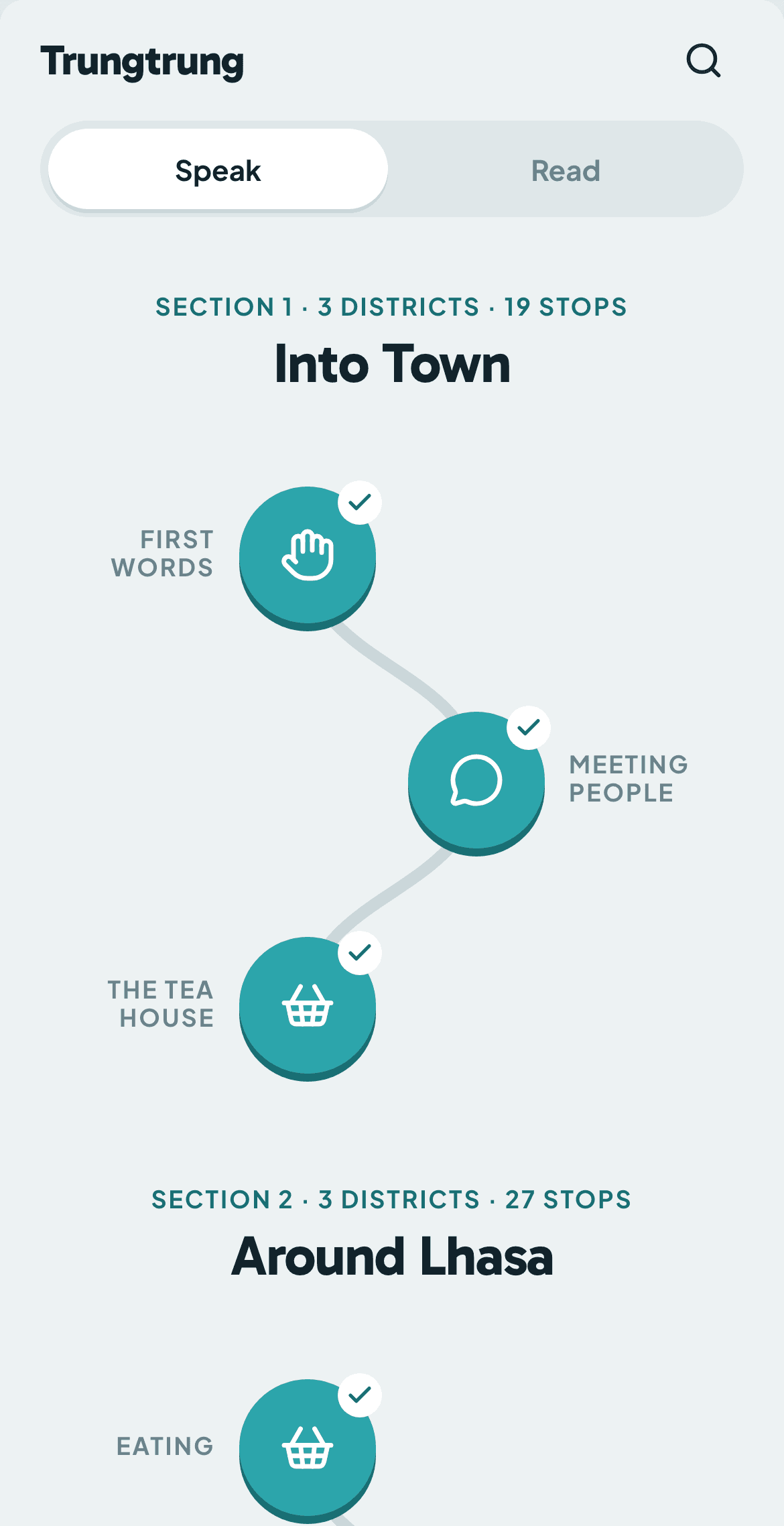
Learn to understand and speak everyday Lhasa Tibetan. You build vocabulary, phrases and pronunciation in the situations you would actually use them: ordering tea, meeting someone, asking the way.
- words
- 1045words
- phrases
- 416phrases
- districts
- 24districts
Read
The uchen script, from the first letter
Learn to read uchen from the ground up. You start with single letters, combine them into stacks and syllables, then read real Tibetan words and signs.
One day you read a prayer flag. Then a shop sign. Then your own name.
- letters
- 44letters
- stacks
- 122stacks
- syllables
- 226syllables
The shape of it
24 places, in one arc
Lessons are grouped into places rather than levels. Each place introduces new words, phrases and reading, and later places build on the ones before.
- 1The Tea House
- 2The Market
- 3The Monastery
- 4The Kora
- 5The Kitchen
- 6The High Pass
- 7The Printing House
- and 16 more24Departure
You walk it twice
When you reach the end, you go round again. The second walk revisits every place and opens stops the first one held back. It is named after the kora, a path walked more than once, each time seeing more.
Tibetan culture
Learn the culture, not just the words
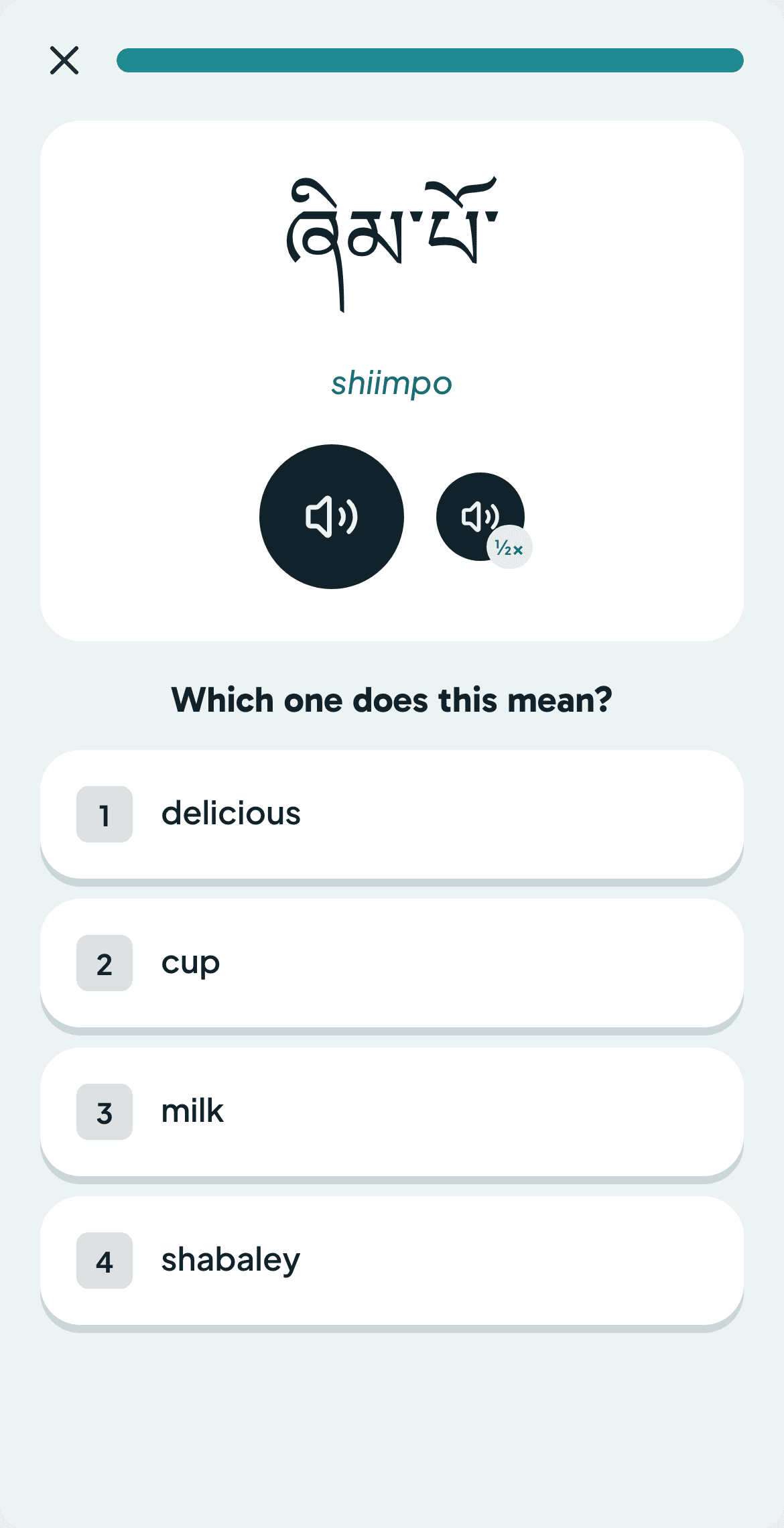
As you walk you collect cards: foods, customs, greetings, clothing, places. Each one explains something the language assumes you already know. You find them along the way rather than revising them from a list.
- Skynamkha
- Airlung
- Fireme
- Waterchu
- Earthsa
The five, in the order they are taught.
A card is not a sticker. There is no shine, no rarity and no pack to open. You meet the thing, and then you have met it.
Read from the letters rather than recognised from a picture. That difference is the whole point of the second track.
How it is made
Decisions that will not change
Each of these is a standing decision, not a launch promise.
- Free, and nothing locked
- All the learning content is free, permanently. A way to support the project arrives after the beta, and it will not unlock lessons or features.
- Offline from the first launch
- Everything ships inside the app. You need no connection on a bus or a plateau.
- No accounts
- Your progress stays on your phone. There is a backup file you can read yourself.
- Every word recorded by a person
- Anything you are asked to imitate is a human voice. Nothing you repeat is synthesised.
- Your voice never leaves the phone
- A recording lasts just long enough for you to compare it. Then it is gone.
- The streak cannot break
- Days walking only ever counts up. Miss a month and it is still there.
- No gamification
- No timers, leagues, hearts or lives. You can get something wrong without losing progress.
- Nothing is locked
- Content that is not ready yet is marked as not ready. Nothing is held back to make you come back.
Questions
The ones people ask first
- I already speak Tibetan but cannot read it. Is this for me?
- Yes, and you are who I had in mind. The Read track assumes you already know how the words sound, so you are learning to recognise something you can already say.
- I have never seen the script. Is it too hard to start?
- You start with single letters and build up from there. There are 44 letters and vowel marks in all, and you meet them a few at a time.
- Which Tibetan does it teach?
- Lhasa Tibetan, the spoken standard, recorded from my own speech. The script is uchen, the printed form you see on signs and in books.
- Is the audio a real voice?
- Every word, phrase and syllable you are asked to imitate is recorded by a person. Nothing you repeat is synthesised.
- How is this different from a general language app?
- General apps teach vocabulary well and culture not at all. Butter tea, the khata scarf, the two goodbyes: that part is why this exists.
- When does it open?
- Soon. Join the waitlist and you get one message on the day, and nothing else.
Join the walk
One message when it opens. Nothing else, and no account.